
What is executive coaching?

wat is executive coaching
BLOG

What is executive coaching?

As a business manager, CEO or executive, you carry a lot of responsibility. You face complex challenges and high expectations, both from yourself and others. Finding the right balance between strategic thinking and daily operational tasks can be quite a challenge. Executive coaching provides the guidance you need to improve this balance and helps you grow as a leader. 

But what exactly does executive coaching entail?

It is a goal-oriented process where you work with a coach to develop your leadership skills and strengthen you both personally and professionally. Together, you will explore your strengths and areas of concern so that you can act more consciously and effectively. You will gain insights that will help you better manage your organisation and achieve long-term success. In addition, executive coaching provides a safe environment in which you develop into a strong leader with an engaged team, monitor your time commitment well and learn management skills and strategic insights to achieve business goals faster.

What do you learn in executive coaching?

During an executive coaching programme, you will have the opportunity to further discover and strengthen your leadership style. You will learn how to communicate more effectively and convey your message clearly and convincingly to your team and other stakeholders. This will not only help you gain trust, but also create support for your vision and strategy.

In addition, executive coaching focuses on sharpening your decision-making skills and strategic thinking. You will learn how to take decisions faster and more purposefully, without losing sight of long-term objectives. Attention is also paid to maintaining a healthy work-life balance. This ensures that you not only function well in the short term, but also retain energy and motivation in the long term. Executive coaching provides the right tools and insights to be stronger in your role as a leader.

What are the benefits of an executive coach?

Executive coaching offers numerous benefits that contribute to your personal growth and that of your organisation. It helps you to lead more confidently and work more effectively. Through targeted coaching, you not only improve your own performance, but also the cooperation and dynamics within your team. You will develop greater insight into how to inspire and motivate others, improving overall productivity and job satisfaction.

You will also be given valuable tools to strengthen your long-term vision and realise your goals in a structured way. A coach offers a fresh and objective view on your business, leading to new insights and innovative solutions. By investing in executive coaching, you not only make strides in your personal development, but also contribute to a stronger and more successful company. Those are the benefits of business coaching!

How can Kurt Vervloet help you?

Working with executive coach Kurt Vervloet means working on concrete growth and improvements within your leadership and organisation. Kurt offers a customised coaching process that is fully tailored to your specific challenges and ambitions. Through a personal and goal-oriented approach, he helps you overcome obstacles, focus on your goals and work on your development process in a result-oriented way.

Kurt acts as a sounding board and guide, supporting you in developing strategies that fit your style and vision. Together, you will work on strengthening your leadership qualities, optimising your business processes and achieving sustainable growth. Contact us today on +32 474 072 444 and discover how executive coaching can help you move forward.

Frequently asked questions about executive coaching

Who is executive coaching suitable for?

Executive coaching is suitable for executives, entrepreneurs and board members who want to further develop their leadership skills and take their organisation to the next level.

How long does an executive coaching process take?

The duration of a trajectory varies depending on your goals and needs. On average, a trajectory lasts between 3 and 12 months, with regular sessions and mid-term evaluations.

What are the rates of executive coaching?

The rate depends on the number of sessions and the level of follow-up required. The frequency can go from one session a month, and can be increased to twice a month. Executive coaching is an investment but we guarantee ROI many times over.

Is executive coaching also possible online?

Yes, executive coaching can take place both physically and online, depending on your preferences and schedule. This offers flexibility and makes the process accessible regardless of your location.

Kurt Vervloet

Kurt Vervloet is a business coach, blogger and speaker. Since 2017, he has been coaching businesses around the world, ranging from solo entrepreneurs, SME companies to executive management teams at large organisations. His clients choose to work with him because of my proven, no-nonsense approach to optimising and scaling businesses. By achieving great results with his clients, he has already been rewarded with several Awards.

How can I keep my staff in line?

How can I keep my staff in line?
BLOG

How can I keep my staff in line?

Retaining Your Employees:
The Art of Keeping Them Engaged and Motivated

In today's competitive job market, it is becoming increasingly essential for employers to find effective ways to retain their top talent. Losing valuable employees can not only be a blow to productivity and morale but can also result in significant financial costs for recruitment and training. Therefore, it is crucial for employers to focus on keeping their staff engaged and motivated. This article explores strategies to achieve this, ultimately helping you build a loyal and committed workforce.

Nurturing a Positive Work Culture: Strategies for Encouraging Employee Loyalty

Creating a positive work culture is the foundation for fostering employee loyalty. When employees feel valued and respected, they are more likely to develop a deeper sense of commitment towards their work and the organisation. One effective strategy is to promote open and transparent communication. Encouraging employees to voice their opinions and concerns can make them feel heard and valued. Regular team meetings, one-on-one check-ins, and suggestion boxes are great ways to facilitate this open dialogue.

Another crucial aspect of nurturing a positive work culture is recognising and rewarding employee contributions. Celebrating achievements, both big and small, can go a long way in boosting morale and making employees feel appreciated. Offering opportunities for professional growth and development is also essential. Providing training programmes, mentorship opportunities, and career advancement prospects can show employees that their growth and success are valued within the organisation. By fostering a positive work culture, you can create an environment where employees are more likely to stay engaged and loyal. 

Boosting Employee Morale:
Uncovering Effective Techniques to Keep Your Staff Happy

Boosting employee morale is crucial for maintaining a motivated and productive workforce. One effective technique is to create a work-life balance. Encouraging flexible working hours, remote work options, or even implementing wellness programmes can help employees feel supported and reduce burnout. Additionally, promoting a sense of camaraderie and teamwork can significantly impact employee morale. Organising team-building activities, social events, or simply providing a space for employees to connect and collaborate can foster a positive and enjoyable work environment.

Regularly soliciting feedback and involving employees in decision-making processes can also boost morale. Employees feel more engaged and valued when they have a say in shaping the organisation's direction. Furthermore, implementing recognition programmes can create a sense of achievement and motivation. Acknowledging outstanding performance through awards, public recognition, or even small tokens of appreciation can make employees feel valued and motivated to excel. By focusing on boosting employee morale, you can create a workplace that employees are excited to be a part of.

Retaining employees is a critical challenge faced by organizations worldwide. By nurturing a positive work culture, implementing strategies to encourage employee loyalty, and boosting morale, employers can increase their chances of retaining their valuable staff. Remember, engaged and motivated employees are more likely to contribute to the success and growth of the organisation. By investing in your employees' well-being and showing them that their work is valued, you can build a dedicated and loyal workforce that will help your organisation thrive in the long run.

Kurt Vervloet

Kurt Vervloet is a business coach, blogger and speaker. Since 2017, he has been coaching businesses around the world, ranging from solo entrepreneurs, SME companies to executive management teams at large organisations. His clients choose to work with him because of my proven, no-nonsense approach to optimising and scaling businesses. By achieving great results with his clients, he has already been rewarded with several Awards.

How to recruit staff?

hoe personeel aanwerven
BLOG

How to recruit staff?

If you want to build a successful business, it is also essential to have an engaged and committed team. A motivated and passionate team will work more efficiently, ensure better results and therefore ensure satisfied customers. Below we describe some ways to recruit staff.

How to recruit staff in Flanders?

Use of job boards

You can consult the largest job board for free: that of the VDAB. Here you can publish your vacancy free of charge. In the vacancy text, try to highlight the enthusiasm, plus points and core values of your company in advance

LinkedIn

LinkedIn is also popular as a job board, but did you know that on LinkedIn you can also just search for people with a particular job title? You can simply add them and send them a message. Beware: there is currently a limit on this, though. With the free version of LinkedIn, you can only invite about 100 people to connect each week.

Networking

Go to events and talk to like-minded souls - they can take your business to the next level too! Do you already have an extensive network? Contact them to ask if they know anyone for the job. You can also always post a job description via your LinkedIn or Facebook.

Recruitment and selection agencies

Does it involve a hard-to-find profile? It might be interesting to contact a recruitment agency specialising in your niche. In doing so, try to negotiate and pay the recruitment fee over several months: if the staff then end up not being suitable and leave after a few months, you will end up paying much less.

Many recruitment agencies also operate as employment agencies. This way, you can also test an employee to see if they ultimately meet your expectations.

Persuading trainees

How often do you hear that a student intern ends up working at their internship site? Maybe this is a good idea for your business too. This is a win-win situation: the intern learns from and also gets to know your company, and you know what kind of meat you have in the hen.

As you can see, there are several ways to recruit suitable staff. It can be a challenging process, but it is crucial for the growth of your business.

Kurt Vervloet

Kurt Vervloet is a business coach, blogger and speaker. Since 2017, he has been coaching businesses around the world, ranging from solo entrepreneurs, SME companies to executive management teams at large organisations. His clients choose to work with him because of my proven, no-nonsense approach to optimising and scaling businesses. By achieving great results with his clients, he has already been rewarded with several Awards.

Recruiting staff - right talent for your business

Personeel aanwerven – juiste talent voor je zaak
BLOG

Recruiting staff - right talent for your business

Finding new employees, it remains one of the biggest challenges for many companies. Ideal staff are scarce and competition is fierce. So how do you still find the right talent for your business? In this article, we will tell you how to profile yourself as an attractive employer and what you need to do to recruit the right staff.

Do you want to find the best employees for your company? Then, first of all, make sure you are an attractive company for potential candidates. A promising job ad that makes people enthusiastic to apply for a job with you is indispensable for this. But, it is best to start at the beginning...

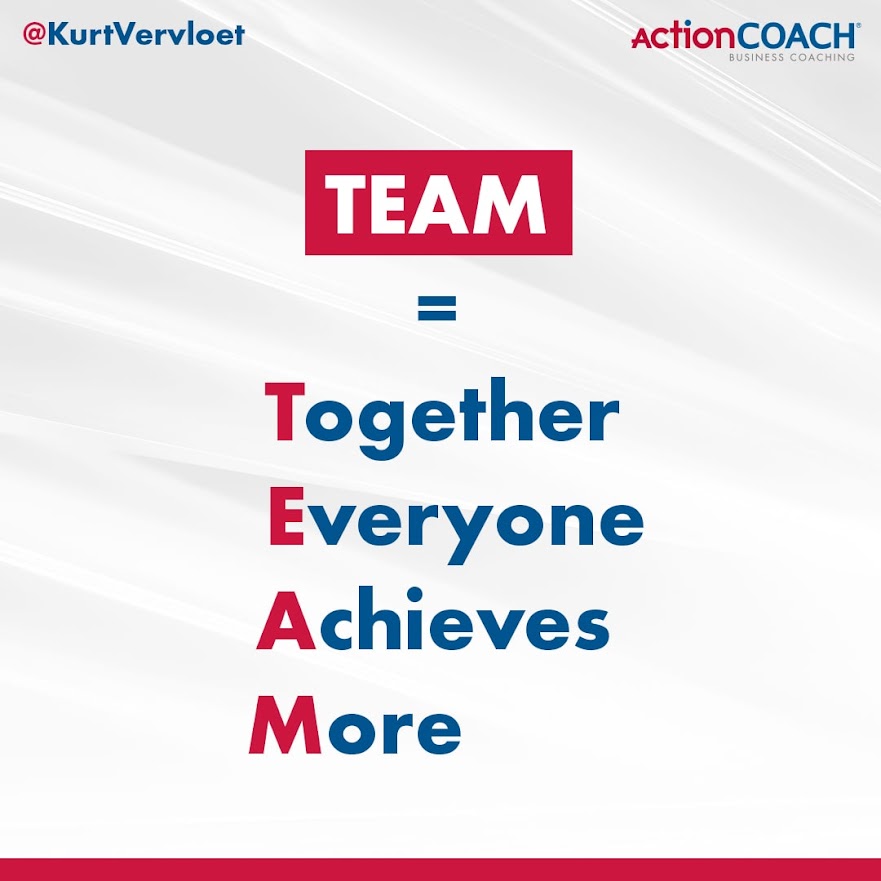
team acroniem

Staff recruitment tip 1: Make your mission, vision and values clear

More and more people are looking for an employer that promotes the same values as themselves. They find it important that a company pursues a positive mission. Therefore, as a company, it is important to define and communicate an inspiring mission, a clear vision and strong values. This way, you can attract new employees who identify with your company and are therefore extra motivated.

Hiring staff tip 2: Invest in your company culture

Establishing your mission and vision is not enough. You need to ensure that everyone in your organisation knows them, feels them and lives them. Your employees need to be imbued with them. To achieve that, mere words are not enough. 

To ensure that every individual in your organisation pursues the corporate mission, it is best to create culture points as a guide for good cooperation. Business leaders, managers and team leaders should lead by example and actively promote these culture points.

At ActionCOACH, we work according to 14 culture points, such as commitment, integrity, collaboration, excellence and gratitude.

Staff recruitment tip 3: Vacancy text that makes your mouth water

The job description can make or crack your recruitment process. If your vacancy text is unconvincing, the chances of finding the ideal candidate are slim. Conversely, if your job description appeals to and inspires people, the pool of applicants, and the chances of finding the ideal new colleague among them, will be a lot higher.

Tips for writing a successful job ad:

  • Describe the job content, desired profile, and expectations.
  • Tell enough about your business and make it inspiring with your mission and vision.
  • Let your corporate culture shine through in the text.
  • Write for your target audience and adjust your tone accordingly.
  • Be honest and clear.
  • Make your job posting stand out by adding playful or funny elements, for example.
  • If necessary, add a nice quote from an enthusiastic employee.
  • Set yourself up reachable for questions.
  • Clearly include instructions on how to apply and include your contact details.

Staff recruitment tip 4: Spread the rumour

A good job posting is one thing, but if nobody gets to see it, it is wasted effort. So make sure as many people as possible know that you are looking for a new colleague. Share your vacancy on your own website and social media channels, but also in groups where there are many potentially interesting candidates.

Also disseminate your vacancy through job platforms, such as Indeed, Stepstone and the VDAB website.

If necessary, also make a vacancy video in which you give candidates an immediate impression of your working environment or in which you also let colleagues speak.

Staff recruitment tip 5: Organise a trial day

Job applicants sometimes dare to hide the truth. Want to be sure what kind of meat you have in the barrel before hiring someone? Then invite the candidate to a trial day (or half-day). Let him work in your team and see how he cooperates with colleagues. Ask your team for feedback afterwards. That way you will immediately have a good idea about your future new employee.

Want more tips on how to grow your business?

Do you have ambitions with your business but could still use help to grow further? ActionCOACH helps entrepreneurs and business owners tackle all challenges successfully. We do this with individual coaching and guidance programmes tailored to your business.

Kurt Vervloet

Kurt Vervloet is a business coach, blogger and speaker. Since 2017, he has been coaching businesses around the world, ranging from solo entrepreneurs, SME companies to executive management teams at large organisations. His clients choose to work with him because of my proven, no-nonsense approach to optimising and scaling businesses. By achieving great results with his clients, he has already been rewarded with several Awards.

Structure in your business - How do you do it?

Structuur in je bedrijf – Hoe doe je dat?
BLOG

Structure in your business - How do you do it?

Setting up a good organisational structure, it is the beginning of an efficient business operation. Yet for many entrepreneurs, it often remains in the background... until it is too late. In this article, you will discover how you can create a streamlined organisation with a better business structure.

Busy, busy, busy. That's how it goes for entrepreneurs. Is time also your biggest obstacle? Or do things sometimes go haywire because of a communication error? Good organisation solves more than a chaotic work environment: you save time, intercept mistakes in time and create a worry-free workplace for your employees.

Het is tijd om aan je bedrijf te werken, niet alleen in je bedrijf

Structure your business tip 1: Start right away

To focus on what matters right now, start-ups like to put their organisation on the back burner. The moment you are well and truly gone, you then have no time left to take care of your internal operations. While your company is growing, make sure it is structured right away. This preparation will bring a lot of benefits when you need it most.

A handy start is a shared planner. In it, you not only keep track of your own calendar, but also see your staff's availabilities and vice versa. Your employees know when they can disturb you or schedule appointments. It's a first step towards transparent communication.

Structure your business tip 2: Work in pieces

Already passed Step 1? Then you probably don't have much time to tackle your entire business structure at once. Fortunately, structuring can also be done step by step. Look at which parts of your work process are most in need of reorganisation and how you can take care of them: automate? Outsource? Or shorten the chain?

Always define a concrete objective for each item. Don't say "I want orderly administration", but "by Friday I want to process all the invoices for that week". Then choose the solution that best achieves that goal, for example an invoicing programme that automatically reminds you of that task.

Structure your business tip 3: Give yourself time

The time-honoured expression 'time is money' does not mean never sitting still, but reminds you to use your time as efficiently as possible. Structuring requires time to scrutinise the workings of your business, devise solutions and implement changes. The time you spend doing this may seem like a waste in the short term, but you'll win it back twice over in the long run.

Moreover, quality over quantity. Entrepreneurs often tend to add more and more, whereas improving what you already have is a more cost-effective solution. It ensures that you are not doing half a job, but delivering quality - even when you do decide to expand your business.

Structure your business tip 4: Trust your people

Smooth operations start with driven staff. If you put the right people in the right places, you will automatically create an efficient shop floor. Capitalise on your employees' strengths and listen to them. Maybe your administrative assistant is full of ideas to improve your communication with automated mailing... Give your people the chance to develop their skills, so you can use them in multiple areas.

Structure your business tip 5: Be prepared to change

A good organisational structure does not emerge automatically, especially if your business has been running for a while. You might not find the solution right away and might have to abandon familiar habits to explore alternative processes. Is a shared planner not for you? Then try a weekly meeting with your colleagues where you share agendas together. Be daring and make time to try different things. If you are willing to change, so are your employees.

Structure in your business: the ultimate test

Structuring your business is a long-term job, but achievable for any entrepreneur. Decide what the priorities are for your business and tackle them step by step. Every little bit helps and together build a cohesive whole. When have you succeeded in your set-up? When the business keeps running even without you, you have taken the most important step towards greater efficiency. After that, you can fine-tune.

Want more tips on how to structure your business?

Are you ready for a more efficient operation, but could use some help? ActionCOACH helps entrepreneurs and companies bring more structure to their processes. With individual coaching individual coaching and assistance programmes customised, you will turn your company into a streamlined organisation.

Kurt Vervloet

Kurt Vervloet is a business coach, blogger and speaker. Since 2017, he has been coaching businesses around the world, ranging from solo entrepreneurs, SME companies to executive management teams at large organisations. His clients choose to work with him because of my proven, no-nonsense approach to optimising and scaling businesses. By achieving great results with his clients, he has already been rewarded with several Awards.
Are your salespeople sabotaging your business?

Saboteren jouw verkopers jouw bedrijf?
BLOG

Are your salespeople sabotaging your business?

If a salesperson does not have the right sales skills, they can potentially talk a customer out of a sale.

Here are seven signs that could stand in the way of a sale:

1. You get objections.

Objections mean that during the conversation you did not give them an opportunity to bring up what are important points for HIM, or that you did not listen when they tried to get more details about certain aspects. Simply stop talking and start listening.

2. You follow your own agenda, rather than theirs.

Follow them. If answers to your questions point in a different direction, follow them.

3. You will be asked for your CV or a testimonial.

This means selling yourself, rather than solving their problems.

4. You have a success score ('closing rate') of less than 50%.

If customers agree to see you after filling in a questionnaire or after half an hour on the phone and more, it is clear they are interested - but you lose them as soon as you actually meet them.

5. You lose customers

You lose customers within the first three to six months of getting them. There can be many reasons for this, but ultimately it is because they are not getting the results they expected.

6. You think your impeding thoughts are real.

"I need to know more! I don't have enough experience. I need to be more! " you say to yourself. You don't win a marathon - or a client - by being more. You win by training more, running more and working harder.

7. You stop following up too soon

After two or three times you give up. Most customers only buy after at least five contacts and as long as they don't clearly say 'no', you can feel free to keep approaching them. The persistent often wins.

A good salesperson makes a difference

Especially in this day and age, it is crucial to build an excellent sales force. Customers know what they want and, thanks in part to the internet, are well-informed and will not settle for less.

Precisely because almost everything can be bought everywhere, a good salesperson can make all the difference. With tact, the right questions and good listening, a potential customer can be guided to the right solution for their needs.

Being skilled at dealing with objections without being the 'pushy' salesperson is a skill that can be learnt where lots of practice and honing is crucial.

How we help

ActionCOACH can help optimise your sales process, can train you and your team in the right 'mind set' and skills to sell professionally and successfully.

Kurt Vervloet

Kurt Vervloet is a business coach, blogger and speaker. Since 2017, he has been coaching businesses around the world, ranging from solo entrepreneurs, SME companies to executive management teams at large organisations. His clients choose to work with him because of my proven, no-nonsense approach to optimising and scaling businesses. By achieving great results with his clients, he has already been rewarded with several Awards.

10 TO-DOs to make your business Corona-proof

10 TO-DO's om jouw onderneming Corona bestendig te maken
BLOG

10 TO-DOs to make your business Corona-proof

As an entrepreneur, you have a great responsibility. You have to provide security and lead your team during this period. It is not obvious, but it is certainly achievable. How is your company dealing with the virus and its effects?

Train not only your team in sales, but also your customers

As an entrepreneur, you have a great responsibility. You have to provide security and lead your team during this period. It is not obvious, but it is certainly achievable. How is your company dealing with the virus and its effects?

Based on the figures from the recent crisis, we can conclude that 1/3rd of companies go out of business, 1/3rd survive and 1/3rd come out stronger.

Which part do you belong to? Those who ACTIVELY bet on all possible opportunities now and adapt to market demands will emerge stronger from this crisis. Surround yourself with experts and the right advice!

Here are 10 to-do's to get ahead of your competition!

1. First things first, don't panic

Stay calm and take your time to sort everything out; Read these to do's carefully and then shoot into action. Don't keep thinking for too long and step into ACTION. In any crisis situation, it is also important to communicate clearly what you are going to do. Keep every employee (and your customers) informed of your plans.

2. Don't argue about the facts

It is true that a pandemic is underway, but there are a lot of messages going around via the (social) media. Whatever one says or whatever one does, there is no point in commenting on it.

The focus should be on your business. Many rules will be added or changed and there will always be people who do not follow certain rules.

3. Think of yourself

Your own health is important! Make sure you are healthy physically, mentally and financially. You are responsible for your people and you cannot help anyone if you are not well yourself. Don't underestimate the importance of this! Besides, you wouldn't want to infect others, would you?

4. Do you need to change your distribution model?

During this difficult period, you may have to change the way you distribute. What you sell or what you deliver may also become different. You may even have to deliver the product or service through a different form.

Think of a fitness coach who could now digitally offer a coaching package with videos. Don't wait until the customer has found the alternatives with the competition. Act on this NOW!

5. Change the source of your stock

Need to find products elsewhere than from previous sources? In many situations, the original source for products or stock can no longer offer the quantity or deliver on time. This can be an opportunity to make a change that was actually needed before.

6. What is your weakest link?

Take a step back and look closely at your entire organisation. Where is the biggest issue causing a negative impact? For some, it is the sales. For others, it's making the product or delivering a service and for still others, it's making sure the team is doing the job effectively.

Can modern technology solve this? Or is there another solution to eliminate or reduce this biggest failure point?

7. Financial challenge or financial opportunity?

In some cases, you have the option to finance debt at a lower rate. That means this pandemic could actually still be useful. Refinancing debt at a lower cost is a unique opportunity that could be a huge benefit.

A reduction in cash flow due to slow payments (higher debtors) could mean higher use of debt capital. A disaster like this, or any other situation (e.g. prepared by local or national governments) often releases large amounts of cash to keep the economy stable.

Whether it is a hurricane, a tornado, floods, forest fires or a pandemic, look at finance as an opportunity that is rare, but a definite possibility... at least if you are well prepared.

8. Your team's morale must be high!

People will always continue to buy products and services. Taxes will be due, restaurants will be open and travel will take place, even if it is now in limited quantities.

There may even be growth in certain sectors. Those who do better at marketing and bet on sales, than their competition, will be the winners in the long run. And those who think 'out of the box' and innovate their services will also be rewarded for their efforts.

This is an opportunity to attract customers from the competition to you. You may even need to change your marketing messages to help customers continue to do business with you. You may want to help your customers understand now that this is even a great opportunity to do business with you.

Does this opportunity present opportunities you can use to increase your marketing and sales efforts? Look for the bright spots. There will certainly be some!

9. Stay committed to marketing and sales

People will always continue to buy products and services. Taxes will be due, restaurants will be open and travel will take place, even if it is now in limited quantities.

There may even be growth in certain sectors. Those who do better at marketing and bet on sales, than their competition, will be the winners in the long run. And those who think 'out of the box' and innovate their services will also be rewarded for their efforts.

This is an opportunity to attract customers from the competition to you. You may even need to change your marketing messages to help customers continue to do business with you. You may want to help your customers understand now that this is even a great opportunity to do business with you.

Does this opportunity present opportunities you can use to increase your marketing and sales efforts? Look for the bright spots. There will certainly be some!

10. Proactivity

React quickly. Prepare for extreme situations. How will your business survive if you only generate half your current turnover?

What should you save on first and how do you communicate this to your team without panic? Quick action and communication are key to success (and survival).

Only, make sure you act from a well-thought-out action plan! You're not alone As an ActionCOACH, I can help you properly evaluate the whole process and make the right decisions.

Kurt Vervloet

Kurt Vervloet is a business coach, blogger and speaker. Since 2017, he has been coaching businesses around the world, ranging from solo entrepreneurs, SME companies to executive management teams at large organisations. His clients choose to work with him because of my proven, no-nonsense approach to optimising and scaling businesses. By achieving great results with his clients, he has already been rewarded with several Awards.

3 Steps to attract and retain the ideal employee to your company

3 Stappen om de ideale medewerker aan te trekken en te binden aan je bedrijf
BLOG

3 Steps to attract and retain the ideal employee to your company

Have you ever said that you just can't find the right people? Or that when you train them, they leave and even take over clients at their next job? Or that they just don't have a work ethic like you do?

If that is the case, you are like many people we know. Still, why is it so difficult to attract and retain great people?

Until the crisis, we had the lowest unemployment ever in Belgium. That meant that the people you wanted were already working for someone else. You really had to go find them and show them why they should choose exactly YOU.

Those days are sadly over. Ask yourself: Are you treating the recruitment process like filling a position? Or are you instead treating the process like a marketing campaign? And is your company really a company they WANT to work for?

You know how much money and time it takes to fill a position, so let's look at some key aspects to increase your chances of doing well:

1. Who or what?

To search for people for a particular position, I recommend writing three pages on the following topics:

Job content (content)
Start with a page on job content.

What are the responsibilities of the job? Think from A to Z about every aspect of the job content. This is immediately a good exercise for your existing employees. Visit them and have them figure out and write down what they think their top 10 priorities are.

You do the same and then compare the lists. If you notice that they differ, then you have someone who is not sufficiently productive.

The type of person (target group)
Second, ask yourself who is the ideal person you want for the position. Just as you take a targeted approach to finding the right client, you should also take a targeted approach to finding the right employees.

Who do YOU want for this position? Who do they currently work for? Where do they currently live? What education have they received? What personality profile do they ideally have, etc.

Think like you would run a marketing campaign where you also summarise your target audience as sharply as possible. Be as clear as possible.

Expectations
On the third page, write what is specifically expected. Or what logical content looks like in your eyes. This is important for the interview.

That way, you give them a clear picture of what you expect from them during the time they work for your business. Recruiting the right people is not just putting up an ad with 'vacancy: new employee wanted'.

It is about finding the BEST person for that job. It is not about finding people who do not have a job, but finding someone who already has a job.

We don't want someone who just wants any job. We want someone who likes to come every day, be productive, AND stay. It's about de-selection.

2. Marketing

You want to reach people who already have a job. After all, many working people are on the lookout for a new job. Create a web page and you, the company owner or manager, will tell more about the job and its content there.

There is space at the bottom of the page to apply. On this page, also discuss the company's vision: where do you want to go?

Aim to inspire readers. Imagine, you come across 2 job offers and the first wants to become the biggest in their industry and train their employees to be experts.

The other had no vision, which one would you choose? Link this webpage to all social media channels such as Facebook, Twitter, LinkedIn, Instagram, etc.

Share wherever you can - make sure your suppliers, friends, employees and customers can share it. Be a true 'recruiter' and not a 'job poster'.

You will have to do enough marketing to find them. Use Facebook ads if necessary.

TIP: Use a job video for this purpose!

3. Schedule 3 to 5 interviews

Remember, you want them to actually de-select themselves. That's how you end up with the ideal candidate.

Group interview
For the first interview, schedule a group interview. Have all candidates answer these three questions in the group:

1. What are your 3 strongest attributes?
2. What are your 3 biggest success experiences?
3. Why do you think you are suitable for this position?

At the same time, bring in your team to observe them and take notes. They can also mingle with the interviewees, talk to them and get a feel for them. After all, they will have to work with them.

Panel interview
You can also do a panel interview. Each member of your team gets to ask questions. This provides variety and takes the pressure off yourself.

Personal interview
Then plan a 1-on-1 interview. Let the candidates talk and make sure there are at least two difficult questions in the "Tell me about a time you..." section.

Question
Devise questions based on your company's core values and mission. If you have experienced team members not being a match for the company in the past, chances are their core values did not match yours.

Trial day
It is a good idea to give them a job interview - and then immediately invite them to come and work for half or full days.

This will allow them to spend time with you and the team and also give you feedback. You are not alone If it is a high-level position, take an interviewee out to dinner and ask them to bring their partner.

You want to hire someone who can get you where YOU want to go. As an ActionCOACH, I can figure out how to get what you want for your business!

Kurt Vervloet

Kurt Vervloet is a business coach, blogger and speaker. Since 2017, he has been coaching businesses around the world, ranging from solo entrepreneurs, SME companies to executive management teams at large organisations. His clients choose to work with him because of my proven, no-nonsense approach to optimising and scaling businesses. By achieving great results with his clients, he has already been rewarded with several Awards.

6 Indispensable qualities of good managers

6 Onmisbare eigenschappen van goede managers
BLOG

6 Indispensable qualities of good managers

Good management is essential for the evolution of your business results. What employees and employers expect from a manager has changed enormously in recent years.

New management styles are needed now and it is important to help your managers develop so that they are at their best.

Nowadays, there are so many possible styles. You have a hard approach, a soft approach, an approach where there is more letting go, etc.

If a manager is able to build trust with his or her team, retention, productivity and engagement can increase.

I have therefore listed 6 indispensable traits to chart the path to professional management.

1. Top managers do NOT micromanage

Successful managers don't try to lord over every detail. If you are invested in the success of your team, you might fall into the trap of feeling you have to guard every detail.

Micromanaging can undermine employee initiative and damage employee motivation. A good manager can let this go.

Make sure they have a sense of responsibility and also give them a chance to grow in their qualities.

2. Top managers build a work culture of mutual trust

Trust is a key element in professional leadership. After all, productive teams know that mistakes are just milestones on the road to innovation. You need to be open to employees coming up with risky experiments.

3. Top managers have fantastic communication skills

Managers who are excellent communicators are good listeners and give others time to speak. They have a clear understanding of the organisation's vision and share it with their team in a way that motivates them. They also keep their team informed about what is happening within the company.

4. Top managers help develop employees' careers

A management study by Google shows that identifying opportunities for employees to master new skills increases the strength and depth of a team. At the same time, you convey a powerful message that you care about the personal well-being of your people.

5. Top managers can handle pressure well

One of the most important qualities of a manager is being able to handle pressure well. There will be days when you feel you are a target for everything and everyone, and you will be held accountable for the performance of others.

Emotional stability is therefore an essential trait for successful managers. Your ability to take care of yourself and withstand work pressure ensures that you remain clear-headed in times of stress.

6. Top managers recognise and reward good work

Giving rewards and recognition to employees is a golden opportunity for managers that is often overlooked. Employee recognition not only increases individual employee engagement, but it has also been shown to increase company loyalty and productivity. Recognising people for their good work is an extremely powerful message to the recipient and their team.

Kurt Vervloet

Kurt Vervloet is a business coach, blogger and speaker. Since 2017, he has been coaching businesses around the world, ranging from solo entrepreneurs, SME companies to executive management teams at large organisations. His clients choose to work with him because of my proven, no-nonsense approach to optimising and scaling businesses. By achieving great results with his clients, he has already been rewarded with several Awards.

Learn, do, succeed. Are you a MASTER in entrepreneurship?

action coach
BLOG

Learn, do, succeed. Are you a MASTER in entrepreneurship?

Successful overnight... 

Wouldn't it be great if we learned something and were immediately good at it? Take one piano lesson and you could play Mozart or Beethoven. Take one drawing lesson and you would be able to design a high-end building. Kick a ball once and become a professional footballer.

If it were that easy, everyone would learn something new every day. The truth is that learning requires practice, and practice requires both refinement and repetition. Mastering a skill is often a lifelong journey, even for the most talented among us. 

The human brain consists of two hemispheres. These independent but interconnected parts of the brain help control the human body.  

Think of them as your 'hard drives'. They collect information and store our experiences and images as we learn and grow. This intricate network prompts voluntary and involuntary actions and reactions as we learn. 

Interestingly, people can still function when one side of the brain is damaged, but they will never be as effective again. We have to use both sides of the brain to master any skill. 

Both sides of the brain 

You have probably taken an online quiz to determine which part is more dominant. Those who call themselves "RIGHT BRAIN" are generally more logical and methodical.

Those who identify as "LEFT BRAIN" are more creative and instinctive. Science continues to evolve on this topic. This concept is called neuroplasticity. 

  • Analytical 
  • Logical 
  • Detail- and fact-oriented 
  • Numeric 
  • Probably thinking in words 
  • Creative 
  • Freethinking 
  • Able to see the big picture 
  • Intuitive 
  • Probably visualising more than thinking in words 

Regardless of how you identify, your brain involves both sides when we learn. It has to process information, manage visual input and interpret audio at the same time. Engaging both hemispheres of the brain is crucial for understanding.

Learning a new skill 

When you first start learning a new concept or skill, the two hemispheres of your brain compete for 'power'. Within seconds, your brain starts receiving and deciphering the new information.

This encryption does not always go well and people often experience confusion when learning something new. This is when the right and left sides of your brain conflict over the information because it does not match what you already know. This confusion can shift to anxiety or disruption, which is both unsettling and beneficial to the learning process. 

Disruption

Disruption and confusion force both hemispheres of the brain to work together. This merging of new inputs increases interest.  

This interest or curiosity, if nurtured properly, can translate into deep learning and ultimately lead to mastery.  

But we will not be able to master any new skill unless we practise and act on what we have just learnt. To perpetuate learning, repetition is crucial. Repetition not only helps form connections in memory, it also allows us to make the skill easily accessible.  

You see this in immersive language teaching. Exposure to a language in the classroom is never as effective as using language in a living environment.

In a living environment, you are forced to communicate by trial and error, and if you are successful, you remember the information more easily. The satisfaction you get from learning naturally gives us an incentive to 'repeat' the behaviour.  

In business, we are often rewarded for mastering, or being proficient in, skills. Regardless of how easy or difficult it was to achieve a level of mastery, we strive to duplicate the feeling and rewards as we continue to learn to progress. Learning also has side effects, as can also be read in this article at Inc.com 

Learning makes you happier

Several studies have shown that the more ambitious the goals we set, the happier we are. And when we set our own goals, our happiness does not depend on others.

We choose how many hours we practise, and we take responsibility for what we achieve. Personal development is a way of ensuring our inner peace.

You remain humble

If we want to learn as much as we can, we are less likely to appear arrogant. Real charmers make sure they don't seem the smartest themselves; they make others seem smart. And when people see that you are trying to learn from them, it becomes much easier to be liked.

You become a coach 

As the leader of your organisation, you need to make learning a part of your corporate culture. One way to start doing this is by teaching others what you have learned over time. You want to become such a great teacher that your company can run itself without you. When you have achieved that, you have truly reached the state of MASTERY. 

the more you learn, the more you earn

How much are YOU learning as an entrepreneur?  

As a business owner, you learn at lightning speed because you need to master all aspects of your business. Some skills you learn easily, others you learn through costly mistakes.  

To minimise failure costs, you need consistent and continuous learning. The more you learn, the more you will want to put into practice. Action is the result of learning and without action, information tends to disappear and fade away.  

This is why top athletes practise individual skills, surgeons receive continuing education to learn new techniques and, as entrepreneurs, we need to keep learning to really master entrepreneurship!

First learn, then remove the L

Kurt Vervloet

Kurt Vervloet is a business coach, blogger and speaker. Since 2017, he has been coaching businesses around the world, ranging from solo entrepreneurs, SME companies to executive management teams at large organisations. His clients choose to work with him because of my proven, no-nonsense approach to optimising and scaling businesses. By achieving great results with his clients, he has already been rewarded with several Awards.