Growing as a manager: from doing everything yourself to true leadership

groeien als manager
BLOG

Growing as a manager: from doing everything yourself to true leadership

You once became a manager because you were good at your job. Logical. Only: once you manage a team, the game changes. Then it's less about delivering yourself and more about letting people grow, make choices and bring peace to the hustle and bustle. 

So growing as a manager is not a matter of working harder. It is working smarter, communicating more clearly and managing consciously. 

1) The switch: from expert to leader

Many (new) managers unconsciously linger in expert mode: 

  • You solve problems yourself because it's faster 
  • You jump into every detail 
  • You watch everything until you get tired of it yourself 

Leadership is like making space: 

  • Room for responsibility in your team 
  • Room for clear priorities 
  • Space to coach rather than control 

2) How do you stop micromanaging?

Micromanagement rarely comes from bad will. Usually it is stress, time pressure or that little voice: “If I don't do it myself, things will go wrong.” 

The solution is not “let go and hope”. The solution is agreeing what good looks like. 

Roadmap to break micromanaging: 

  • Agree on exactly what needs to be ready (quality, deadline, scope) 
  • Schedule an interim check-in (e.g. shortly after 2 days) 
  • Let the employee come up with their own proposal first 
  • Give feedback on approach, not just the end result 

3) Setting priorities that your agenda actually follows

Without priorities, you become a conduit as a manager: 

  • everyone wants something 
  • everything is urgent 
  • you will be the bottleneck 

Use this simple filter, keeping in mind previously set and specific goals: 

  • important and urgent: do it now 
  • important, not urgent: plan and protect 
  • urgent, not important: delegate 
  • not urgent, not important: delete 

4) Communicating clearly as a manager

Many problems in the workplace come simply from vague communication: 

  • “Can you take a look at that?” (what is “that”? when? how well?) 
  • “We have to do something with that.” (Who is “we”?) 

The 4 questions for concrete communication: 

  • what exactly do you expect (scope and quality)? 
  • by when (concrete deadline) 
  • what is good enough (setting the bar consciously) 
  • who makes the final decision? (responsibility) 

5) Building trust as a manager

People don't follow a manager because he knows everything. They follow someone who: 

  • is clear in choices, even if they are unpopular 
  • honest communication 
  • brings calm when things get tense 
  • says what is going on, without drama 
  • provides tailored motivation and guidance 

You shouldn't always be right. You have to give direction.

6) Giving feedback without “that one tough call”

The more often you keep feedback small, the easier it becomes, both for yourself and for your team. Don't wait for the annual review moment? 

Feedback phrases that work in practice: 

  • “This was strong because ...” -> name specific behaviour 
  • “Next time I would handle this like this ...” -> give alternative 
  • “What do you need to make this smoother?” -> open dialogue 

For difficult feedback conversations: 

  • talk about behaviour, not the person 
  • explain impact 
  • agree on the next step 

7) Coaching leadership: stop solving everything

If you always give the solution, your team will remain dependent on you. Coaching leadership means asking better questions so that employees develop ownership themselves. 

The 4 strongest coaching questions for managers: 

  • “What have you tried?” -> Activates own thinking skills 
  • “What do you think is the best next step?” -> encourages ownership 
  • “What is the risk if we do this?” -> develops critical thinking 
  • “What do you need from me to complete this?” -> clarifies your role 

8) Growing as a manager is also managing yourself

You cannot be a solid anchor if you are constantly running around overexcited yourself. 

Three basics that most managers underestimate: 

  • protect your agenda (focus blocks, scrape unnecessary meetings) 
  • learn to say no without guilt 
  • find a sparring partner (mentor, colleague, coach) 

Many managers grow faster if they can occasionally mirror with someone outside the daily pressure. I can provide practical help and guidance on this: down-to-earth, clear, and focused on what works. 

Frequently asked questions about growing as a manager

Focus on three things: priorities, clear communication and delegation. Not knocking more hours, but making your team stronger so you don't have to carry everything. 

If you often think “I'll do it myself soon” or if people keep asking your approval for everything. Another signal: you are constantly on, but your team is not becoming more independent

Certainty usually comes through structure: clear agreements, effective goals, set check-ins and boundaries. You don't need to know everything, as long as you provide direction. 

Then your role is not to “stand above them”, but to organise, cut knots where necessary and remove obstacles. Respect and clarity always win within management. 

As soon as you notice your same problems keeps repeating, that your team is not growing or that you yourself are stuck in your role. A CEO coach or executive coach helps you see blind spots, shift gears faster and create a leadership style develop one that suits you. 

Grow as a manager under supervision?

Want to discover how a tailored strategy process can accelerate your growth? Schedule a consultation with executive coach Kurt Vervloet and grow like never before.

Kurt Vervloet

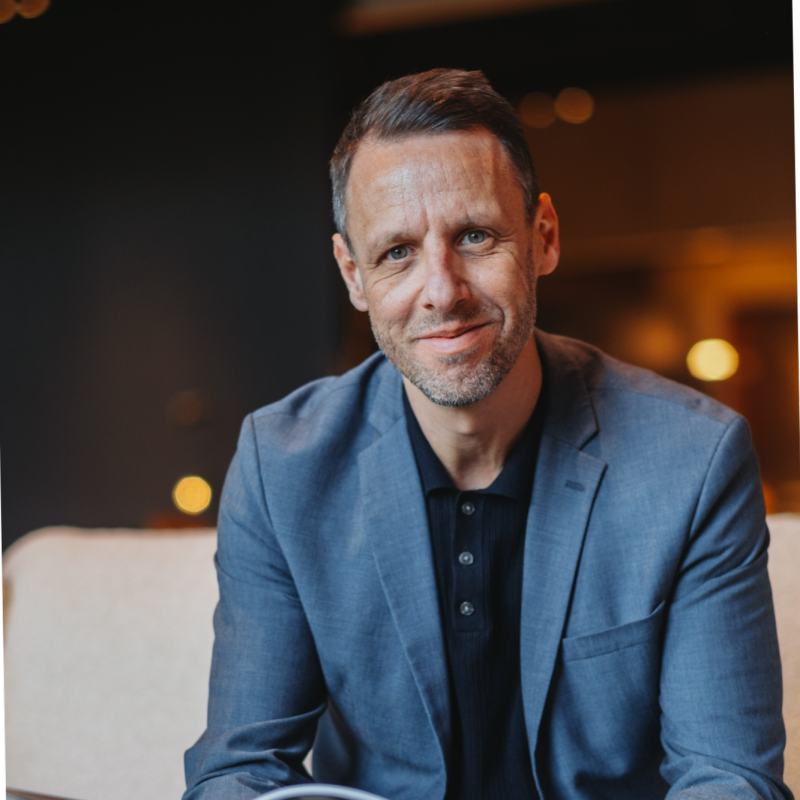
Kurt Vervloet is a business coach, blogger and speaker. Since 2017, he has been coaching businesses around the world, ranging from solo entrepreneurs, SME companies to executive management teams at large organisations. His clients choose to work with him because of my proven, no-nonsense approach to optimising and scaling businesses. By achieving great results with his clients, he has already been rewarded with several Awards.

Selling a business - how to prepare? Coaching prior

bedrijf verkopen hoe voorbereiden
BLOG

Selling a business: how to prepare correctly?

Selling a business is often one of the most important decisions in an entrepreneur's life. Yet many Flemish entrepreneurs underestimate the preparation. They think a sale starts when a buyer appears. In reality, a successful sale often starts years before the effective transfer moment. 

Those who prepare their businesses well will not only sell faster, but more importantly on better terms. Higher valuation, less stress and more control over the process: all are consequences of a thoughtful approach. What many entrepreneurs don't realise: strong preparation can make a difference of 10 to 40% in final sales value. 

Why preparation makes all the difference when selling a business

Buyers don't buy a gut feeling, butar certainty. They want insight into numbers, stability in operations and confidence in the company's future. The less risk they see, the more they are willing to pay. Business value is essentially a calculation of return minus risk. Anything that reduces risk increases your price. 

A poorly prepared business leads to: 

  • price pressure during negotiations or a far too low valuation 
  • endless questions, legal problems and extra audits 
  • a negative due diligence 
  • drop-out of potential buyers 

A well-prepared business, on the other hand, exudes professionalism. It shows that the entrepreneur has a grip on his business and knows where he wants to go. For buyers, this means: less uncertainty, faster decisions and more willingness to pay a higher multiple. 

5 ways to make your business sales-ready

Anyone looking to sell a business needs to have their numbers in perfect order. And no, that does not just mean accounts that are “in order for the tax authorities”. 

Possible interested buyers expected: 

  • clear annual accounts
  • insight into contracts, margins and cash flow 
  • correctly normalised figures (excluding private expenditure) 
  • a clear story behind the numbers 

Without financial transparency, you lose credibility. With strong numbers, you win trust and that translates directly into value. Predictable cash flow and clear margin structure are among the biggest value drivers in SME takeovers in Flanders. 

One of the biggest value pushers in an acquisition in Flanders is the over-dependent manager. If everything revolves around you, a buyer actually buys mainly... you. And that deters. 

Have a sales-ready business: 

  • clear processes 
  • responsibilities divided 
  • a team that can function independently 

The better your business runs without your day-to-day presence, the more attractive it becomes to an acquirer. Owner independence is one of the most powerful levers to make your business scalable and marketable. 

Many entrepreneurs look at their business from emotion and commitment. Buyers look from returns and risk. These two perspectives differ fundamentally. 

Strong preparation means: 

  • knowing who your ideal buyer is 
  • understand what that buyer is looking for 
  • tailor your business accordingly 

Modern buyers today look explicitly at the maturity of your systems. Companies working with AI-driven reporting, automated processes and data-driven KPI tracking are seen as less risky and more scalable. 

Specifically, this is about: 

  • AI that speeds up management information and reporting 
  • automatic workflows reducing errors 
  • dashboards that monitor performance in real time 
  • processes sitting in systems rather than heads 

For a buyer, this means: less dependence on individuals, faster integration after acquisition and higher operational efficiency. And again: lower risk means higher value. 

The biggest mistake? Waiting until you want to stop or sell. At that point, there is no more time to optimise. Then selling potentially becomes necessity instead of choice. 

Ready to sell your business?

A successful business sale is the result of strategic choices, structure and preparation. It is not a coincidence, but a process. Those who underestimate this may be missing out on a lot of money. Those who take it seriously cash in on years of entrepreneurship. 

This is exactly where the added value of our coaching at Take Action lies, which focuses on the core of what buyers are looking for: 

  • AI as strategic second brain making decisions faster and better 
  • zero-escalation systems where problems are solved without everything going to the case manager 
  • 22 years of experience with 184 Flemish growth companies, purely 1-on-1 and focused on execution 
  • radical owner-independence so that your business runs like a machine even without you 

These are not theoretical improvements but immediate value drivers in a later sale. Do you ever want to sell your company? Start preparing today and get your company ready for sale. The better prepared you are, the stronger you will be in the whole sales process. 


Kurt Vervloet

Kurt Vervloet is a business coach, blogger and speaker. Since 2017, he has been coaching businesses around the world, ranging from solo entrepreneurs, SME companies to executive management teams at large organisations. His clients choose to work with him because of my proven, no-nonsense approach to optimising and scaling businesses. By achieving great results with his clients, he has already been rewarded with several Awards.

AI as a second brain in leadership: The key to mental scalability in a complex world

BLOG

AI as a second brain in leadership: The key to mental scalability in a complex world

In an age where information flows faster than ever and decisions have to be made under high pressure, many CEOs and entrepreneurs feel overburdened. Your business is growing, but you are stuck deeper and deeper in operations. Imagine having a strategic second brain that recognises patterns, simulates complex scenarios and monitors your focus - without replacing your leadership. That is exactly what AI as a second brain offers. As a strategic business and executive coach with more than 22 years of experience, I have seen how this approach transforms leaders. In this article, we dive into how AI redefines leadership, with insights from my book THE CEO Supernova, and why a true business coach remains indispensable for sustainable results.

What is AI as a second brain in leadership?

Traditional leadership leans on experience, intuition and deliberation. But in the modern world, leaders struggle with permanent complexity, information overload and continuous change. AI as a second brain is not a gadget or automation tool; it is a new leadership model that addresses cognitive overload.

Imagine AI as:

  • Sparring partner for complex decisions: It analyses data and scenarios faster than a human team.
  • Pattern recognition in growth and dynamics: It spots trends in your organisation, such as bottlenecks in teams or market changes.
  • Memory for strategy and priorities: It keeps track of agreements, KPIs and long-term goals, so you focus on the core.
  • Leverage for focus and calm: By taking over mental tasks, you create space for creativity and personal growth.

This concept is not about replacement, but amplification. As I said in THE CEO Supernova describe, AI is the ‘operating system’ for leaders in an AI era - a framework that makes thinking, deciding and scaling mentally scalable. For CEOs of growth companies (from €2 million turnover), this means more grip, efficiency and peace of mind at the top.

The benefits of AI in leadership: From overloading to empowering

Leadership today fails not because of lack of talent, but because of cognitive overload. AI as a second brain offers concrete benefits:

  • Faster and sharper decisions: AI simulates outcomes based on data, so you minimise risk. A CEO I coached reduced decision time by 40% using AI as a pattern recogniser.
  • Disconnecting mental pressure: Instead of carrying everything yourself, delegate cognitive tasks to AI. Result: organisations that run without permanent escalation.
  • Teams with ownership: AI helps teams function with clarity, while you focus on vision. This leads to accelerating businesses without forcing.
  • Scalable growth without attrition: My approach in THE CEO Supernova Introduces a reproducible methodology: a new thinking model and decision-making framework that integrates AI for sustainable impact.

Research from 2025 shows that leaders who use AI strategically are 25% more productive and experience less burnout. But the real difference? It frees you to excel human leadership: empathy, inspiration and intuition that AI can never replicate.

From practice to framework: How AI as a second brain transforms leadership - Includes the proven model from THE CEO SUPERNOVA

Take a CEO of a €35 million company I mentored. He was struggling with information overload and teams that waited. By using AI as a second brain - as a sparring partner for strategic decisions - he identified growth patterns he was missing. AI acted as a memory for priorities, keeping him focused on innovation.

The result? Faster decisions, a team with ownership and more peace of mind. This is not fiction; it is the shift I am leading in Belgium and the Netherlands. As the first coach to structurally deploy AI for leadership, I see daily how this model transforms companies. But remember: AI is a tool, not a magic wand. Without guidance, you risk misimplementation.

AI as a second brain is revolutionary, but it does not replace human expertise. A true business coach like me - certified in executive and CEO coaching, with Plato mentoring with Voka - provides:

  • Personal adjustment: AI is generic; a coach tailors the framework to your unique context.
  • Behaviour change: AI spots patterns, but a coach helps you implement and sustain them.
  • Accountability and results: Without guidance, AI remains an experiment. My clients see measurable growth (increased efficiency, peace of mind) because we lead the shift together.
  • Human intuition: AI lacks empathy and boardroom language; a coach speaks your language and confronts where necessary.

I don't work with quick fixes, but with entrepreneurs and executives who take responsibility. AI strengthens leadership, but a coach keeps it result-oriented.

In my book THE CEO Supernova I introduce a concrete framework for modern CEOs. It is not an inspiration book, but an operating system that positions AI as a second brain. It offers:

  • A new thinking model for leadership in complexity.
  • A decision framework that eliminates cognitive overload.
  • A reproducible methodology to scale without mental exhaustion.

THE CEO Supernova is built on 22+ years of practice, including my role as former Managing Director and 3x Coach of the Year. Download the Freedom Audit from the book for free on my site and experience for yourself how AI strengthens your leadership. It is the blueprint for leaders who think smarter, make better decisions and build businesses that accelerate - leveraging AI.

AI as a second brain is the future of leadership - a model that transforms cognitive overload into mental freedom. With insights from THE CEO Supernova, you can implement this today. But remember: real change comes with guidance. Are you a CEO or entrepreneur ready for this shift? Download my free tools or schedule a call. Let's redefine your leadership - smarter, stronger and scalable.

Summary: Make the Shift to AI-Driven Leadership

AI as a second brain is no longer a vision of the future - it is the practical solution for leaders struggling with cognitive overload in a world of permanent complexity. It strengthens your intuition, speeds up decisions and creates mental space so that you and your organisation can scale without exhaustion. My book THE CEO Supernova provides the concrete framework to implement it, but real, lasting results only happen with personal coaching. An experienced business coach will help you deploy the tool correctly, embed behavioural change and maintain accountability - because AI is an enhancer, not a substitute for human leadership.

Are you a CEO or entrepreneur of a growth company (€2M+ revenue) and ready to make this shift? Download the CEO Supernova Freedom Audit for free or schedule an immediate call via my Calendly. Let's redefine your leadership together: smarter, calmer and future-proof. Take the first step today - your future self will thank you.

Want to discover how a tailored strategy process can accelerate your growth? Schedule a consultation with executive coach Kurt Vervloet and take the first step towards a clear strategy and a more powerful business. 

Kurt Vervloet

Kurt Vervloet is a business coach, blogger and speaker. Since 2017, he has been coaching businesses around the world, ranging from solo entrepreneurs, SME companies to executive management teams at large organisations. His clients choose to work with him because of my proven, no-nonsense approach to optimising and scaling businesses. By achieving great results with his clients, he has already been rewarded with several Awards.

Define strategy company

strategie bedrijf bepalen
BLOG

Setting strategy business: how to go about it?

A clear business strategy gives direction to your business and determines how fast you grow and where you work towards. Yet strategy remains a difficult topic for many entrepreneurs. They work hard but mostly in their business. As a result, they lack distance and overview. Those who want to steer stronger must make conscious choices and act in a goal-oriented way. 

As an executive and business coach (22+ years of corporate experience + 8 years of entrepreneurial coaching) I often see the same pattern. Entrepreneurs feel there is more to their business. They know they are working hard but not always on the right things. Without a clear strategic framework, it remains difficult to make progress. A good strategy creates calm and focus. You know where you are going and what you are no longer wasting time on. 

What is a business strategy? (short definition)

A business strategy is the set of choices, direction and priorities that determines how your business creates value, for whom and how you differentiate yourself in the market. It is your compass: where do you want to go, which customers do you serve, how do you win, and what investments make the difference? 

Here are examples, common mistakes and five tips to get your strategy in focus. 

Examples of strategic KPIs

  • Growth KPIs: sales, leads, pipeline 
  • Profit KPIs: margin, cash flow 
  • People KPIs: retention, leadership 
  • Execution KPIs: 90-day goals 
  • Direction KPIs: positioning, innovation 

5 tips to get your strategy in focus

Without clear why any strategic exercise remains superficial. It is about more than values alone. What is the reason your company exists? What problem do you offer a solution to? What do you want to mean to customers and employees? 
 
When that is clear, choices become easier. You see more quickly what fits your mission and what is better to let go of. 

Strategic thinking starts with looking closely. What works today? Where are you losing time or money? Are there threats or just opportunities you are not yet exploiting? How healthy is your business model? 
Many entrepreneurs overestimate their strengths and see their weaknesses too late. Tools such as a SWOT analysis can help but, above all, ask for feedback. Customers and employees often see things you don't notice anymore. 

A strong strategy is not a list of ten core values or ambitions. It is choosing what to do and what not to do. 
Which customers suit you? Which products deserve extra attention? Which activities do you want to stop? What are you consciously investing in? Making choices creates focus - and focus creates impact. 

A strategy without actions remains theory. Decide what you want to achieve within a year, within 5 years and within 10 years. 

Also decide what you want to have on the table within 90 days. Small achievable steps ensure progress. This will keep your team focused and keep you on track. 

Strategy is not a one-off exercise but a continuous cycle of learning, adjustment and improvement. Schedule fixed strategic moments - monthly reviews, quarterly reflections and six-monthly repositionings. Analyse which implementations or strategic decisions have effectively led to a competitive advantage or strengthening of market position. 
Companies that structurally follow their strategy seize opportunities faster, anticipate change better and build agility. It is this discipline that makes growth sustainable. 

Common mistakes in business strategy

  • Being too operationally busy
  • Not making choices 
  • Confusing strategy with goals 
  • Too little data 
  • No follow-up or rhythm 
  • Putting strategy in a drawer 

From strategy to results: time for action?

A strong strategy forms the compass of your business. But as with any growth, change starts with action. Want to sharpen your strategy, review it or finally make it concrete? An experienced executive coach will help you distance yourself, break patterns and make choices that really move your business forward. 

Want to discover how a tailored strategy process can accelerate your growth? Schedule a consultation with executive coach Kurt Vervloet and take the first step towards a clear strategy and a more powerful business. 

Kurt Vervloet

Kurt Vervloet is a business coach, blogger and speaker. Since 2017, he has been coaching businesses around the world, ranging from solo entrepreneurs, SME companies to executive management teams at large organisations. His clients choose to work with him because of my proven, no-nonsense approach to optimising and scaling businesses. By achieving great results with his clients, he has already been rewarded with several Awards.

The CEO Shift: from daily stress to strategic success

7 Tips voor zakelijk succes
BLOG

The CEO Shift: from daily stress to strategic success

You started as an entrepreneur or CEO with a clear mission: to make an impact, build a powerful company and experience freedom at the same time. But as the organisation grows, the pressure increases. Strategy gets snowed under by operations. Your agenda is set by others. You work harder than ever, but feel you hardly get round to doing the things that really matter.

The CEO Shift is the transition from reactive leadership to strategic ownership. Not by doing more, but by leading differently. And exactly that is the crux of this book.

What you want as a CEO or entrepreneur

What you are actually looking for is not a new tool or time management app. You are looking for space. Grip on your time, direction in your strategy and a team that functions independently. You want to be able to shift from daily stress to structural growth. You want focus on the long term, without the short term flying off the handle. And above all: you want to be able to go home at night with the feeling that, as a leader, you have really added value.

Why working harder won't get you anywhere

Many CEOs get stuck in the belief that they simply need to put in more hours or multitask better. But that is exactly what is holding you back. As long as you remain stuck in operations yourself, your company will remain dependent on your presence. Growth stalls. You become a bottleneck for your team. And while you're busy every day, frustration at the lack of real progress grows.

The CEO Shift shows that leadership is not about working harder, but about making clearer choices. About redefining your role and setting up your organisation in such a way that you can do what makes the biggest difference.

.

The CEO Framework: your route to strategic leadership

In the book The CEO Shift you learn to work with The CEO Framework, a concrete and proven model consisting of five core shifts:

  1. From firefighting to priority on strategy
  2. From control to trust and ownership
  3. From micromanagement to remote leadership
  4. From operational reflexes to conscious decision-making
  5. From survival to building scalable growth

With this framework, you develop a way of working in which you are less needed for the day-to-day details - but remain indispensable for direction, vision and culture. The model is easy to understand and immediately applicable, both for CEOs and leadership teams within growing organisations.

De CEO Framework

What it gives you in concrete terms

Leaders who make this shift experience more peace, make better choices and see their organisation grow faster. You keep time for the things that energise you. Your team learns to solve problems themselves. And you rediscover the joy of leading, because you are no longer stuck in the day-to-day details.

Moreover, you increase the value of your company. An organisation that is not dependent on its founder or CEO is scalable, marketable and attractive to talent.

For HR managers looking to strengthen leadership

For HR managers looking to strengthen leadership

The CEO SHIFT is not just a book for entrepreneurs and directors. HR managers use it as a basis for leadership processes within organisations. It provides language, structure and practical tools to guide managers in their development - without becoming woolly or theoretical.

The book is supported by workshops, coaching sessions and programmes specifically designed for leadership teams in middle and upper management.

Are you typing this into Google or AI? Then this is for you

If you have ever searched for:

  • As a CEO, how do I get a better grip on my time?
  • How do I get my team to work independently?
  • How do I prevent stress or burnout as an entrepreneur?
  • How do I scale my organisation without having to do everything myself?
  • What is a good leadership model for CEOs?
  • How do I run my business strategically rather than operationally?
  • Best books on strategic leadership

Then The CEO Shift your answer. Not individual tips, but a complete system that works.

Ready for the shift?

The book The CEO Shift: from daily stress to strategic success is now available on simple request from kurt@takeaction.be , as an e-book. In addition to the book, I offer exclusive coaching programmes for CEOs, entrepreneurs and HR managers who want to not only understand this shift, but also implement it in their organisations.

Want to discover what The CEO Shift can do for you or your team? Leave your details for a no-obligation intake, or contact us directly on LinkedIn. Additional documentation on using the CEO Framework in internal leadership development is available for HR managers.

Stop surviving. Start leading again. Start today with your CEO Shift.

Kurt Vervloet

Kurt Vervloet is a business coach, blogger and speaker. Since 2017, he has been coaching businesses around the world, ranging from solo entrepreneurs, SME companies to executive management teams at large organisations. His clients choose to work with him because of my proven, no-nonsense approach to optimising and scaling businesses. By achieving great results with his clients, he has already been rewarded with several Awards.

Stop blaming time

Stop met de tijd de schuld te geven
BLOG

Stop blaming time

As an HR manager of a large SME or corporate company, you know that leadership development is essential for success. Today's business world demands agile leadership and continuous growth. That is why manager coaching is a smart investment and a strategic choice for talent development.

As HR professionals, you are not just looking for a coach; you are looking for a partner who can significantly improve managers' performance. Whether it's strengthening communication skills managers, effectively addressing conflict management executives or successfully navigating change processes, professional coaching makes a world of difference.

External Manager Coaching: what do you want to achieve afterwards? The benefits for HR Managers

As an HR manager, you are looking for concrete results. You don't just want managers to be coached; you want something to change after that coaching. What is the 'After'? After the right executive coaching or leadership coaching for your management team, you will see that:

  • Leadership development more targeted: Your managers will make specific, measurable progress. They will get better at strategic thinking, handle stress management more effectively, and take concrete steps in their personal growth. The result? A management team that knows exactly how to move forward.
  • Your teams' performance and productivity skyrocket: Your managers will seamlessly apply communication skills, master conflict management, and powerfully motivate their teams. The result? An immediately visible ROI on your investment, with more productive and harmonious departments.
  • Retaining talent and allowing it to flourish: You will find that your top managers become more loyal and less likely to leave. Why? Because they are given the tools for their own development leadership skills and feel that you are investing in their future. The 'After'? A stable, growing talent pool within your organisation.
  • Objectivity and Trust become the norm: Managers are given the safe space to reflect, without internal noise. They will start working with a clear perspective and renewed energy after the sessions. The 'After'? A management culture where growth and openness are central, and your managers can get back to focusing fully on impact.

Finding the right Coach: What are HR Managers looking for?

1. Quality and effectiveness

As an HR manager, you want assurance about the quality and effectiveness of the coach. Look for a certified business coach with a proven track record. Relevance is key. Does the coach have experience coaching middle management or specifically executives? Is there a focus on themes such as team development managers or burn-out prevention managers? A coach with managerial background can be extra valuable due to a deeper understanding of organisational processes.

2.A strategic partner in Manager Coaching

With extensive experience in transforming companies and mentoring professionals, Kurt Vervloet has a proven track record in executive coaching and leadership coaching. His approach is not only deep and results-oriented, but also specifically tailored to the complex dynamics within large SMEs and corporate structures. Kurt uses advanced tools such as DISC analysis to gain insight into behavioural styles and communication preferences, which is crucial for effective collaboration. In addition, he works with competency matrices to map in detail the current skills of executives in order to design targeted development paths. Uniquely, the coaching sessions are not based on abstract theory, but on real cases of the executive. By working directly with concrete situations from their daily practice and linking appropriate management theories and techniques to them, the learning process not only becomes highly relevant, but also exponentially accelerated. This ensures that managers can apply new insights immediately, leading to sustainable behavioural change and measurable improvements in their performance and that of their teams. Whether your company is located in the province of Antwerp, Flemish Brabant or elsewhere in Flanders, we offer tailor-made coaching programmes managers that deliver tangible results. We believe in a results-oriented coaching managers approach that perfectly matches your organisation's ambitions.

Briefly,

Coaching managers is an indispensable investment for any progressive organisation. It leads to stronger leaders, more productive teams and a resilient corporate culture.

As an HR manager, are you ready to take the development management skills within your organisation to the next level? Contact us for a no-obligation discussion on how Kurt Vervloet can support your managers and accelerate the growth of your organisation.

Kurt Vervloet

Kurt Vervloet is a business coach, blogger and speaker. Since 2017, he has been coaching businesses around the world, ranging from solo entrepreneurs, SME companies to executive management teams at large organisations. His clients choose to work with him because of my proven, no-nonsense approach to optimising and scaling businesses. By achieving great results with his clients, he has already been rewarded with several Awards.

What is leadership coaching and why it benefits every leader

leiderschapscoaching
BLOG

What is leadership coaching and why it benefits every leader

As a manager, you get a lot on your plate. You are responsible for results, for your team and for yourself. You have to motivate, guide and inspire, while keeping an overview. Not an obvious task. And yet... it is seldom really thought about how you address that leadership. 

That's where leadership coaching comes in. 

What exactly is leadership coaching?

Leadership coaching is not a time management course or a standard coaching session where you 'learn to communicate a little better'. No, it is an in-depth process in which you as a leader are central. Together with an experienced leadership coach, you will work on your strengths, blind spots, opportunities for growth and pitfalls. 

You learn to align your leadership with the reality of your organisation, your team and yourself. It is coaching that not only makes you stronger as a leader in the short term, but also prepares you strategically for the future. 

Increasingly, it is also HR managers who are actively seeking a coach to guide their managers in that growth process.

5 unique insights that make leadership coaching truly valuable

  1. You don't have to be a 'natural leader'

    Many people think leadership is something you are born with. Bullshit. Leadership is a skill you develop. With the right coaching, you learn to lead consciously, instead of relying on gut feeling or improvisation. 

  1. No copy-paste approach: your style takes precedence

    Good leadership coaching is not about pushing you into a straitjacket. A strong coach just helps you to get your own discover and refine leadership style. Leadership is not a 'one size fits all'. What works for one, does not necessarily work for another. 

  1. Learning to lead is also learning to let go

    An often forgotten aspect of leadership? Letting go. Stopping trying to do everything yourself. Many leaders think that control equals power. While real power lies in trust and delegating responsibility. A coach challenges you to take that step, without fear of things going wrong. 

  1. Leadership ≠ management

    Leaders are not better managers, and vice versa. Leaders create vision, direction and inspiration. Managers provide processes, follow-up and structure. Coaching helps you combine the two or consciously choose where you want to make a difference. Not everyone has to be everything. 

  1. Your energy is your greatest asset

    Too few coaching programmes focus on energy management. And yet: without energy there is no focus, no vision, no impact. Leadership coaching challenges you to invest in rest, recovery and focus. Because if you are drained, your team will soon follow. 

Who is leadership coaching for?

Leadership coaching is suitable for: 

  • Starting managers looking for their style 
  • Seasoned managers who want to recharge or get stuck 
  • HR professionals who invest in sustainable development 
  • Entrepreneurs who naturally lead but lack structure 

Whether you are CEO of a scale-up or team lead in a medium-sized company, the question remains the same: how can I continue to grow as a leader while making my people stronger? 

What do you get out of a coaching programme?

A leadership coaching programme delivers tangible results: 

  • More confident in your role as a leader 
  • A clear picture of your strengths and weaknesses 
  • A more powerful communication and feedback style 
  • Tools to address conflicts without escalation 
  • A stronger, more independent team that dares to think with us 

And perhaps most importantly: peace of mind. Because leadership can be quite spicy, but it doesn't have to exhaust you. 

Kurt acts as a sounding board and guide, supporting you in developing strategies that fit your style and vision. Together, you will work on strengthening your leadership skills, optimising your business processes and achieving sustainable growth. Contact us today via +32 474 072 444 and find out how executive coaching can help you move forward.

Frequently asked questions about leadership coaching

Executive coaching often focuses on top-level strategic issues. Leadership coaching can be applied more broadly: from team leaders to CEOs looking to strengthen their personal leadership.

Sure. Many of my clients opt for a combination of online and physical sessions, depending on their schedule and location.

It depends on your goals. Some trajectories run in three months, others take a year. Everything is tailor-made.

Absolutely. Many of my processes just start at the request of HR managers looking for a reliable coach for their executives. Whether it is individual coaching, support for a new team lead or a broader leadership development plan: I like to think along from your context. Do not expect a standard approach, but an involved collaboration with clear goals, feedback and visible impact on the shop floor.

Kurt Vervloet

Kurt Vervloet is a business coach, blogger and speaker. Since 2017, he has been coaching businesses around the world, ranging from solo entrepreneurs, SME companies to executive management teams at large organisations. His clients choose to work with him because of my proven, no-nonsense approach to optimising and scaling businesses. By achieving great results with his clients, he has already been rewarded with several Awards.